The San Francisco ADU Investor Playbook: Cost, Yield, and Reality
Accessory Dwelling Units are the single highest-yielding improvement most SF property owners can make. This guide covers the real costs, realistic rents, financing options, rent-control implications, and the timeline owners should actually expect.
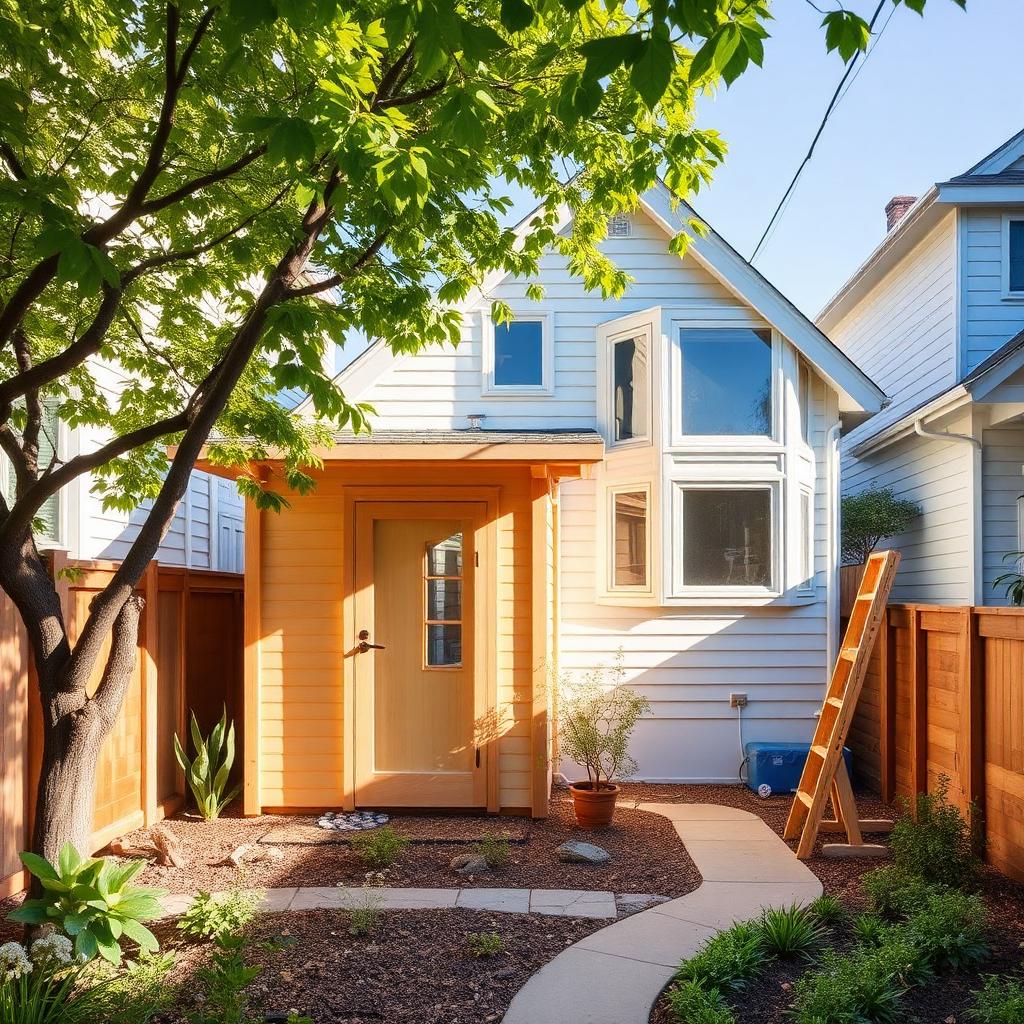
Why ADUs are the highest-leverage move in San Francisco
California state law (SB 9, AB 68, AB 881, and a long list of follow-ups) has made it dramatically easier to add an Accessory Dwelling Unit (ADU) to almost any SF property. San Francisco has further loosened local rules. For owners with existing single-family homes, basements, garages, or underbuilt rear yards, an ADU is often the single highest-yielding improvement they can make.
Christopher's take: I have seen well-executed SF ADUs return 8 – 14% on cost and add $400K – $800K+ in property value. I've also seen owners blow $500K on units that never rent for what they thought. The difference is almost always pre-construction planning — not construction quality.
This guide pairs with the multi-family investing guide, the landlord exit strategy guide, and the condo vs TIC vs SFH guide.
The four ADU types
| Type | Description | Typical SF cost | Typical rent |
|---|---|---|---|
| Garage conversion | Existing garage → studio/1BR | $200K – $400K | $2,400 – $3,500 |
| Interior conversion | Basement, attic, in-law unit legalization | $150K – $400K | $2,200 – $3,800 |
| Attached new build | Addition to existing structure | $400K – $700K | $3,000 – $4,800 |
| Detached new build | Standalone unit in rear yard | $500K – $900K | $3,000 – $5,000 |
These ranges are real and current. The biggest drivers of variance: structural conditions, kitchen/bath count, finish level, and whether you're solving for the cheapest rentable unit or the highest-rent unit.
SF-specific ADU rules to know
- No owner-occupancy requirement (state law)
- No off-street parking required for most properties (state preemption)
- Ministerial approval — qualifying ADUs do not require discretionary planning review
- 120-day permit clock (state law) — though SF often exceeds this in practice
- Up to 1,200 sf for detached new construction
- By-right additions for many lots regardless of zoning density
- Existing-structure conversions generally favored over new construction
The rent-control wrinkle
This is where SF gets interesting. As of current SF rules:
- Newly-constructed ADUs are exempt from SF rent control (per state Costa-Hawkins rules)
- Legalized in-law units (previously unpermitted) generally fall under SF rent control once permitted
- The single-family home itself may or may not be rent-controlled depending on whether you live in one of the units
Translation: a brand-new detached ADU in your rear yard gives you full rent flexibility forever. A legalized basement in-law gives you a rent-controlled tenant from day one. Both can be great investments — but they have very different long-term economics.
Read the SF rent control guide before you make this decision.
The yield math: worked example
Scenario: SF Sunset District single-family home owner builds a 600 sf detached ADU in the rear yard.
| Line | Amount |
|---|---|
| Hard construction cost | $450,000 |
| Soft costs (design, permit, fees) | $80,000 |
| Contingency | $40,000 |
| All-in cost | $570,000 |
| Monthly market rent | $3,800 |
| Annual rent | $45,600 |
| Operating costs (insurance, maintenance, utilities) | $4,800 |
| Net operating income | $40,800 |
| Yield on cost | 7.2% |
| Estimated value add to property | $600,000 – $800,000 |
Yield on cost compares favorably to almost any other investment, especially with leverage. If you finance $400K of the $570K cost at ~8% (renovation/HELOC), the cash-on-cash yield on your $170K of equity is roughly 15 – 20%, depending on financing.
Financing options
| Source | Pros | Cons |
|---|---|---|
| HELOC | Fast, flexible | Variable rate, taps your home equity |
| Cash-out refinance | Locks in a 30-yr rate | Refinances your existing low-rate mortgage |
| Renovation loan (FNMA HomeStyle / Freddie CHOICE) | Combines purchase + construction | Underwriting heavy |
| Construction loan | Purpose-built | Higher rates, conversion paperwork |
| CalHFA ADU grant | Up to $40K for soft costs | Limited windows, restrictions |
| Cash | Simplest | Highest opportunity cost |
For owners with sub-4% existing mortgages, I almost always recommend HELOC during construction → refinance only if rates drop. Don't blow up your sub-4% loan to fund the ADU.
Realistic timeline
| Phase | Time |
|---|---|
| Pre-design feasibility | 2 – 4 weeks |
| Design + drawings | 6 – 12 weeks |
| Permit submittal + approval | 3 – 9 months |
| Construction | 5 – 10 months |
| Final inspection + CofO | 2 – 6 weeks |
| Lease-up | 2 – 6 weeks |
| Total | 12 – 24 months |
If anyone tells you SF ADUs take 6 months end-to-end, they're selling something. Plan realistically.
What kills ADU economics
- Underwriting rent based on Zillow estimates instead of local comps
- Skipping the soils/structural review on hillside lots — surprises are 6-figure
- Cheap finishes that drop rent more than they save in cost
- Ignoring sound separation — neighbor disputes and tenant turnover kill yield
- Not planning utility separation (PG&E sub-metering, separate water if possible)
- Failing to plan for parking displacement if you're converting a garage
When ADUs don't make sense
- Tiny lots with no buildable rear yard and no convertible interior space
- Hillside lots where excavation costs are punishing
- Buildings where adding a unit triggers code-upgrade cascades beyond what value supports
- Owners planning to sell within 18 months — won't recoup the time investment
The exit math
A finished, rented ADU adds roughly 60 – 80% of cost to the appraised property value on average. The income capitalizes into the appraisal, and the marketability premium of a 2-unit property over a 1-unit property in SF is real.
For owners thinking about selling within 3 – 5 years, adding an ADU usually pencils. For owners planning a 10+ year hold and looking for income, it almost always pencils.
Next steps
Pair with the multi-family investing guide, the SF rent control explanation, and the neighborhoods directory for ADU-friendly lot patterns.
📞 Want a sanity check on an ADU pro forma? Reach out via the contact page. I'll walk through your lot, your numbers, and the realistic outcome.
Frequently asked questions
The questions San Francisco buyers, sellers, and landlords ask me most often on this topic. All answers are expanded by default — click any question to collapse it.
Do I need owner-occupancy to build an ADU in San Francisco?+
Are new ADUs subject to San Francisco rent control?+
How much does an SF ADU really cost?+
How long does the SF ADU permit process take?+
How much value does an ADU add to my SF property?+
Related San Francisco guides
Keep going — these are the next reads I'd hand a investor client after this one.
How to evaluate, underwrite, finance, and operate San Francisco multi-family properties — written from over a decade of buy-side and listing experience. Covers cap rates, rent-controlled rent rolls, condo and TIC exits, soft-story risk, and the underwriting mistakes that quietly destroy returns.
How to defer capital gains tax when you sell a San Francisco investment property — the timeline, the rules that actually matter, the replacement strategies that work for SF appreciation, and the traps that cost investors millions every year.
An SF investment Realtor explains why San Francisco cap rates look unattractive on paper, what they actually mean for total return, and how sophisticated investors use them in this market.
The complete, plain-English guide to San Francisco rent control: which buildings are covered, how much rent can legally go up, allowable passthroughs, owner move-in and Ellis Act rules, buyouts, and the mistakes that cost landlords and tenants the most money.
Christopher Lee's definitive first-time buyer playbook for San Francisco — how to set a real budget, choose the right neighborhood, win in multiple offers, navigate TICs and condos, and avoid the mistakes that cost SF buyers six figures.
The pre-listing playbook San Francisco sellers actually need: which projects return more than they cost, what to skip, the realistic prep timeline, and how staging works in SF (where Victorians, Edwardians, and small-footprint condos each need different treatments).
How much home can you afford?
Run real numbers on jumbo loan limits, down payment, and monthly costs for a San Francisco purchase.