Condo vs TIC vs Single-Family in San Francisco: How to Choose
The three ownership structures every San Francisco buyer evaluates — condominiums, tenancies-in-common, and single-family homes. Real cost differences, financing realities, and the trade-offs that actually matter.
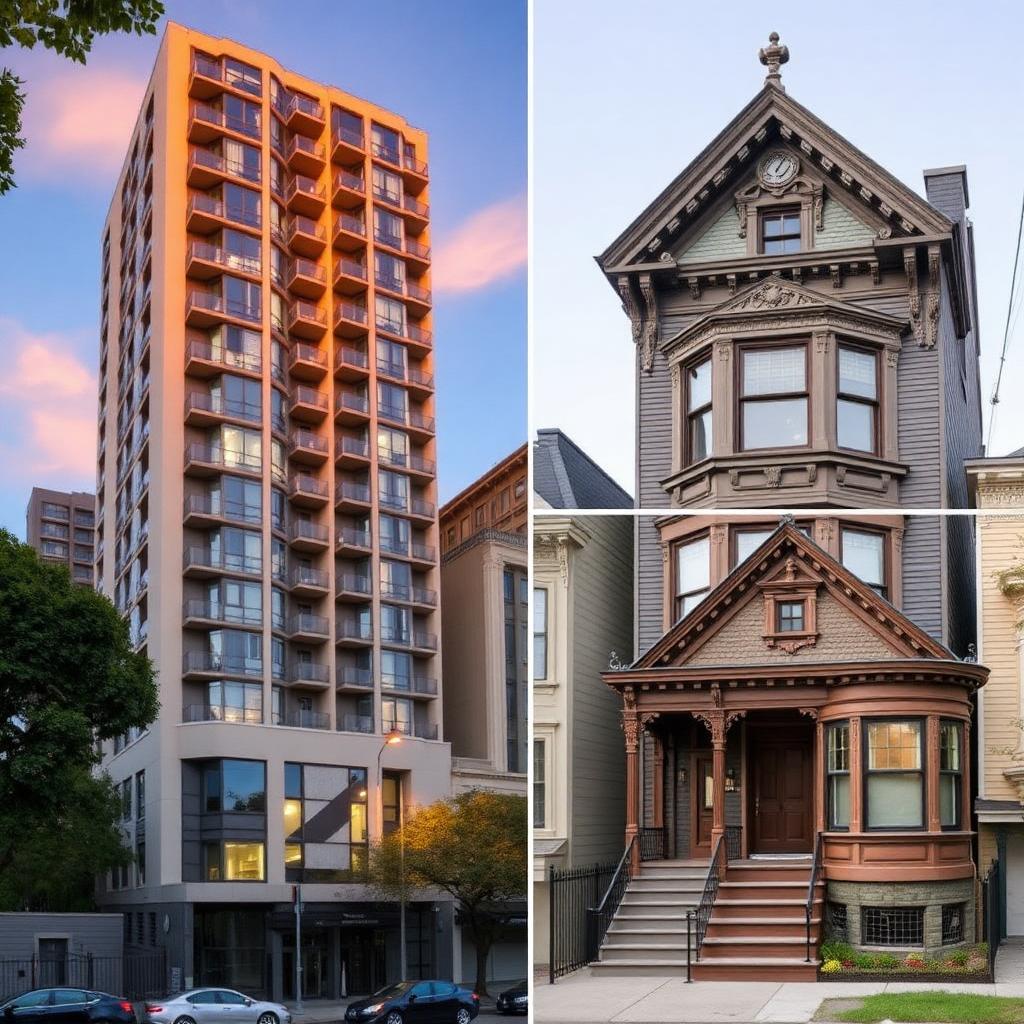
The choice every SF buyer faces
In most American cities, "what should I buy?" means picking a neighborhood and a bedroom count. In San Francisco, you also pick an ownership structure — and the structure changes your monthly payment, your loan options, your resale liquidity, and your long-term appreciation profile more than most buyers realize.
The three structures: condominium, tenancy-in-common (TIC), and single-family home (SFH). I'll walk through each honestly.
Christopher's framing: Pick the structure for your real life, not for the headline price. The cheapest entry point is almost always a TIC, but TICs come with constraints that don't suit everyone. The most expensive is almost always an SFH, but that premium buys real things.
If you're earlier in the process, read the first-time buyer guide first.
Condominium (condo)
You own your unit + an undivided interest in common areas. The building is governed by an HOA. Each unit has its own deed and its own loan.
Pros:
- Conventional 30-year fixed financing widely available
- Down as low as 3 – 5% with the right loan
- HOA handles roof, exterior, common systems
- Easy to refinance, easy to resell
- Strong title insurance, predictable underwriting
Cons:
- Monthly HOA dues ($400 – $1,500+ in SF)
- Special assessments possible
- Pet, rental, and renovation restrictions vary by building
- Newer buildings concentrated in SoMa, Mission Bay, Hayes Valley — limited Victorian/Edwardian inventory
- HOA financials and litigation must be reviewed carefully
Typical price point in SF: $600K – $2.5M for 1 – 3 BR
Tenancy-in-Common (TIC)
A group of owners holds fractional interest in a single deed for the whole building. You have exclusive use of your unit by group agreement. Almost a uniquely-SF structure.
Pros:
- 10 – 25% cheaper than equivalent condos
- Access to classic Victorian/Edwardian housing stock unavailable as condos
- Often desirable neighborhoods that have no condo inventory
- Path to condo conversion exists for some buildings (limited and slow)
Cons:
- Specialty financing — fractional TIC loans from a handful of local lenders, typically 7/1 or 10/1 ARM, higher rates than conforming
- Down typically 10 – 25% (fractional) or down to 10% with group loan
- Group dynamics matter — your co-owners are your partners
- Resale pool is smaller — only TIC-comfortable buyers
- Condo conversion is currently restricted in SF; do not buy on the assumption you'll convert
Typical price point in SF: $500K – $1.8M for 2 – 3 BR
Christopher's TIC honesty: TICs work brilliantly for some buyers and poorly for others. The deciding factor is rarely the unit — it's the group, the TIC agreement, and the lender relationship.
Single-Family Home (SFH)
A standalone deed for the whole lot — usually 2 – 4 stories of living space, sometimes with an ADU, often with a small yard.
Pros:
- No HOA dues, no co-owners, no group decisions
- Full control over renovations, rentals, ADUs
- Strongest financing — conventional, jumbo, all available
- Deepest resale buyer pool
- Strongest historical appreciation
- ADU potential — see the ADU investor playbook
- Often comes with parking
Cons:
- Most expensive structure per square foot at entry
- 100% of maintenance is on you
- SF Victorians and Edwardians come with deferred-maintenance landmines
- Property tax bill is the largest of the three — see the SF property tax guide
Side-by-side: monthly cost at similar value
Illustrative comparison — $1.2M purchase, 20% down, current jumbo rates:
| Cost line | Condo | TIC | SFH |
|---|---|---|---|
| Mortgage P&I | ~$5,800 | ~$6,300 | ~$5,800 |
| Property tax | ~$1,250 | ~$1,250 | ~$1,250 |
| HOA / TIC fees | $600 – $1,200 | $200 – $500 | $0 |
| Insurance | $50 – $100 | $50 – $100 | $200 – $400 |
| Maintenance reserve | $100 | $150 | $400 – $600 |
| Total monthly | ~$7,900 – $8,500 | ~$7,950 – $8,300 | ~$7,650 – $8,050 |
Run your own scenarios with the SF mortgage calculator.
Which structure for which life situation?
| Situation | Strongest fit |
|---|---|
| First-time buyer, low down, want predictability | Condo |
| Maximizing space for your dollar | TIC |
| Long-term, family-formation, full control | SFH |
| Investor / landlord-curious | SFH with ADU or small multi-family — see multi-family investing |
| Pied-à-terre, low-maintenance | Condo |
| Will renovate aggressively | SFH |
| Pure value play, accept constraints | TIC |
Financing reality check
- Condo — every major lender. Down as low as 3% on some programs.
- TIC — a handful of SF-specialty lenders. Fractional loan rates ~0.75 – 1.5% above conforming.
- SFH — every major lender. Jumbo dominant.
Resale liquidity
- SFH: deepest buyer pool, fastest absorption.
- Condo: strong pool, building-specific factors matter.
- TIC: smallest pool — fine in strong markets, price-sensitive in weak ones.
Where to look in SF by structure
- Condos — SoMa, Mission Bay, Hayes Valley, Yerba Buena, Russian Hill, Nob Hill
- TICs — Mission, Lower Pac Heights, NoPa, Inner Richmond, Castro, Bernal Heights
- SFHs — Noe Valley, Bernal Heights, Cole Valley, Sunset, Richmond, West Portal, St. Francis Wood
Browse the full SF neighborhoods directory.
Next steps
Read the first-time buyer guide, buyer closing costs, and investing in SF multi-family.
📞 Not sure which structure? Reach out through the contact page.
Frequently asked questions
The questions San Francisco buyers, sellers, and landlords ask me most often on this topic. All answers are expanded by default — click any question to collapse it.
Is a TIC a bad investment in San Francisco?+
Can a TIC convert to condos in San Francisco?+
What down payment do I need for a TIC?+
Are HOA dues on SF condos worth it?+
Do single-family homes really appreciate more in SF?+
Related San Francisco guides
Keep going — these are the next reads I'd hand a buyer client after this one.
Christopher Lee's definitive first-time buyer playbook for San Francisco — how to set a real budget, choose the right neighborhood, win in multiple offers, navigate TICs and condos, and avoid the mistakes that cost SF buyers six figures.
Look up any San Francisco property tax bill, parcel history, permit record, and assessed value the same way a working Realtor does — plus how supplemental bills, Prop 13, Prop 19, exemptions, and appeals actually affect what you pay.
Down payment is only one line. This guide walks through every dollar a San Francisco buyer needs at the closing table — lender fees, escrow, title, prorations, reserves, and the SF-specific items most first-time buyers miss.
What a real San Francisco pre-approval looks like — jumbo limits, asset documentation, RSU and bonus income, and how listing agents actually read your letter.
The complete, plain-English guide to San Francisco rent control: which buildings are covered, how much rent can legally go up, allowable passthroughs, owner move-in and Ellis Act rules, buyouts, and the mistakes that cost landlords and tenants the most money.
The pre-listing playbook San Francisco sellers actually need: which projects return more than they cost, what to skip, the realistic prep timeline, and how staging works in SF (where Victorians, Edwardians, and small-footprint condos each need different treatments).
How to evaluate, underwrite, finance, and operate San Francisco multi-family properties — written from over a decade of buy-side and listing experience. Covers cap rates, rent-controlled rent rolls, condo and TIC exits, soft-story risk, and the underwriting mistakes that quietly destroy returns.
How much home can you afford?
Run real numbers on jumbo loan limits, down payment, and monthly costs for a San Francisco purchase.