How Much Rent Is Your Property Worth?
How to accurately estimate what your San Francisco rental is worth in today's market — using the same comp methodology, neighborhood adjustments, and Costa-Hawkins considerations a working SF Realtor uses. Includes a step-by-step framework, pricing pitfalls, and when to use a rent estimator vs a professional CMA.
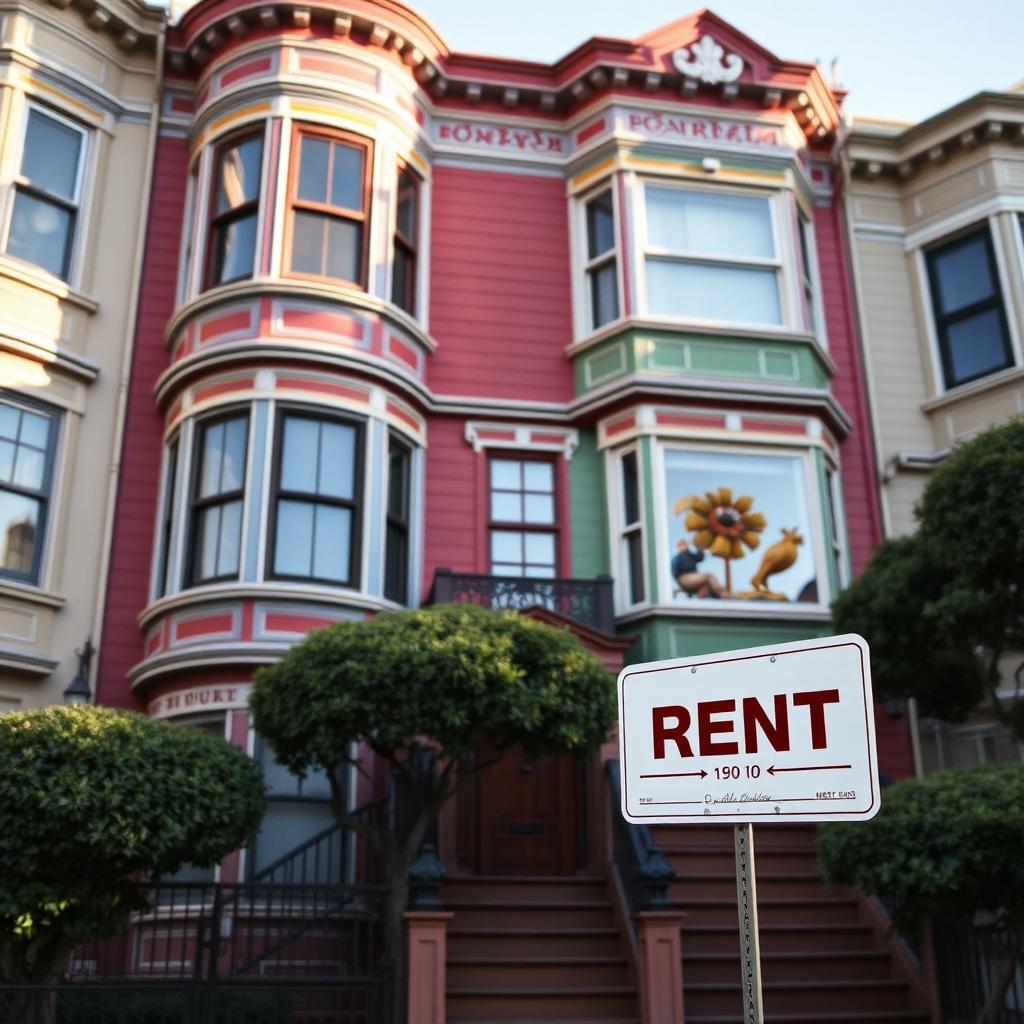
Photo: A typical SF "For Rent" moment — what you price it at on day one determines what you collect for the next 5+ years under rent control.
I'm Christopher Lee — a San Francisco Realtor and property manager (CA DRE #02120811). I price rentals in San Francisco every week — Victorian flats in the Mission, Sunset bungalows, Marina pieds-à-terre, SoMa condos, in-law units in Bernal, ADUs in the Richmond. Pricing a rental in this city is not what Zillow's tool says it is. Zillow's algorithm doesn't know which window your bay faces, doesn't know your block has a microclimate that fogs in by 2pm, doesn't know the building next door just rented an identical unit for 9% less last week.
For a market-rate San Francisco rental, the first-month rent you set is more consequential than almost any other decision you'll make for the duration of that tenancy. Because most SF buildings are rent-controlled, that starting rent — plus the small annual increases allowed under Chapter 37 — is essentially the only number you'll be able to charge for years. Get it 5% too low and you've locked in a meaningful permanent income shortfall. Get it 10% too high and your unit sits empty for two months, which costs more than the rent overage would have produced over the entire tenancy.
This is the rent-pricing framework I use for my own management portfolio and for the landlords I advise. It is evergreen — the methodology doesn't change with each market cycle, only the inputs.
Why this matters. On a rent-controlled unit with an expected 7-10 year tenancy, the first-month rent decision drives 80+ months of income. A $200/month pricing error compounds into $16,000-$24,000 of cumulative cost. Pricing deserves real diligence, not a 5-minute online check.
The methodology in one paragraph
The right rent for an SF unit is the highest price that a qualified tenant will accept within 30 days of listing, given the unit's specific features and the current market. Everything below is a structured way to find that number — comparable analysis, adjustment for unit-specific features, vacancy cost modeling, and pricing strategy for the listing period.
Step 1: Build the comp set
Start with comparable units that are either (a) recently rented or (b) currently active in the same micro-market.
What makes a useful comp
- Same bedroom count. A 2BR is not a comp for a 1BR with den.
- Similar square footage. ±15% is the practical band; bigger differences need explicit adjustment.
- Same building class. Victorian/Edwardian flat ≠ 1990s mid-rise ≠ luxury 2020 high-rise.
- Same neighborhood and similar block. Pacific Heights is not a comp for Lower Pac Heights; Mission Dolores is not a comp for the rest of the Mission.
- Recent. Pulled within the last 60-90 days. SF rental market moves; 6-month-old comps are wrong.
- Similar amenities profile. In-unit laundry, parking, dishwasher, outdoor space — these are large adjustments.
Where to source comps
- Active listings — Apartments.com, Zillow Rentals, Craigslist (still surprisingly accurate for the small-multifamily market), Zumper, HotPads.
- Recently rented data — direct from agents you know managing similar properties, your property management contacts, building-by-building knowledge.
- Your own building. If you own a building with similar units, your own historical re-rents are gold.
Pro tip. I keep a running spreadsheet of every SF rental I price or manage — date, address, type, asking, leased, days on market. After a year of disciplined tracking, you don't need Zillow. After three years, your data is better than any algorithm because it's specific to the micro-markets you operate in.
How many comps you need
Five high-quality comps will tell you the answer. Three is the minimum for credibility. Ten or more is rarely necessary — at that point you're collecting data, not pricing.
Step 2: Adjust for unit-specific features
Once you have your comp set, adjust each comp for differences vs. the subject unit. Rough adjustment magnitudes (every market is different — these are starting points):
| Feature | Typical SF adjustment (monthly rent) |
|---|---|
| In-unit washer/dryer | +$100 to +$250 |
| Shared laundry in building | +$25 to +$75 |
| Dedicated parking | +$200 to +$500 |
| Tandem or shared parking | +$100 to +$300 |
| Dishwasher | +$50 to +$150 |
| Outdoor space (private patio/yard) | +$100 to +$400 |
| Shared outdoor space (deck, garden) | +$50 to +$150 |
| Skyline or bay view | +$200 to +$600 |
| Top floor (light, quiet) | +$50 to +$200 |
| Garden or ground floor (street noise, less light) | -$50 to -$200 |
| Renovated kitchen (within last ~5 years) | +$150 to +$400 |
| Renovated bath | +$75 to +$250 |
| Original architectural detail (Victorian moldings, fireplace) | +$50 to +$150 |
| Single bathroom in a 2BR+ unit | -$100 to -$300 |
| Gas vs. electric range | +$25 to +$50 |
| Central heat | +$50 to +$150 |
Adjust each comp upward or downward to reflect the subject unit's features relative to the comp. Take the median (not the mean — the median is less sensitive to outliers) of the adjusted values. That's your comp-derived market value.
Step 3: Apply micro-market factors
SF rental micro-markets are influenced by a handful of factors that comp analysis often misses:
Microclimate
A unit in Outer Sunset four blocks from the beach rents at a different price than the same unit in Inner Sunset because of fog. A south-facing unit on a sunny block in the Mission rents above an identical north-facing unit. Buyers and renters care about this in SF specifically more than in almost any other US city.
Block-level character
Within the same neighborhood, blocks vary. A tree-lined block with renovated Victorians rents above an otherwise identical block with mid-century apartment blocks and street parking competition. A block adjacent to a busy commercial corridor rents above a block five streets in.
Transit proximity
Within walking distance of a major Muni/BART stop adds value. Within walking distance of a tech shuttle stop adds more in some neighborhoods.
School proximity (less than nationally, but it matters)
For family-targeted rentals, proximity to specific SF public elementary schools matters more than the algorithms reflect — SF's school assignment system makes "in zone" a marketable feature.
Building character
A small Victorian flat with a long-term, quiet building of three units rents above an otherwise identical unit in a 12-unit Edwardian building with rotating young-professional tenants.
Local insight. For my own management portfolio, I maintain block-level pricing notes for the dozens of SF micro-markets I operate in. A 2BR/1BA in upper Noe Valley between 24th and 26th is a different price from a 2BR/1BA in lower Noe Valley between Cesar Chavez and 28th. The difference can be 8-12%.
Step 4: Stress-test against the vacancy cost
A unit that sits vacant costs you money. The carrying cost of vacancy at the SF level looks like:
Monthly vacancy cost ≈ Rent + utilities + cleaning + holding + opportunity cost
For a $4,000/month unit:
- Lost rent: $4,000
- Common-area utilities and building costs you can't avoid: $200
- Cleaning, showing, listing turnover: $300-500 amortized
- Total: ~$4,500-4,700 per month vacant
If you price the unit $200/month over market and it takes an extra two months to lease, you've lost approximately $9,000-9,400 in vacancy cost — and you'll only "recover" the $200/month overage over 47 months. And under rent control, that 47-month recovery is fragile (if the tenant leaves earlier, you don't recover the gap; if they stay 100 months, you do).
The asymmetry is severe: leaving money on the table is far cheaper than pricing yourself into vacancy.
Rule of thumb
In a normal SF market, I price aggressively at the top quartile of the comp range when:
- The unit is genuinely superior (renovated, top floor, parking)
- The marketing has been done well (good photos, well-written ad, strong listing platforms)
- The seasonality is favorable (March-June and September-October)
I price at the median of the comp range when:
- The unit has any condition deficiencies
- Marketing is constrained (no photos, no parking shown, dated kitchen visible)
- The market is showing signs of softening
- It's a slow season (mid-summer, late November-January)
Step 5: Position the listing for the price
The price you can achieve depends on the quality of the listing. The basics:
Photos
- 10-15 professional photos minimum
- Wide-angle, well-lit
- All lights on, blinds open
- Empty unit cleaned and freshly painted before photos
- Hero shot is the strongest room (usually living room or kitchen)
- Include hallway, bath, and any architectural detail shots
Listing copy
- Lead with the strongest feature ("Top-floor 2BR Edwardian with bay views and renovated kitchen")
- Specifics, not adjectives — "renovated 2022" beats "modern"
- Include square footage where favorable
- Confirm pet policy, parking, laundry, utilities included
- Be honest about defects — buyers (and renters) lose trust fast when they discover deal-breakers at the showing
Distribution
For market-rate SF rentals, the right channels typically include:
- Apartments.com (largest reach)
- Zillow Rentals
- Zumper
- HotPads
- Craigslist (still strong for the small-multifamily and roommate-aware market)
- Direct posting to neighborhood-specific channels (Nextdoor, neighborhood Facebook groups for some properties)
- Your own contact list and previous tenant network
Showing strategy
- Pre-screen by email/phone before showing. Confirm income (3x rent minimum is typical), employment, move-in date, pet status. A 10-minute call eliminates 70% of unqualified showings.
- Group showings (or scheduled 15-min back-to-back showings) create implicit competition and reduce your time.
- First weekend with full marketing in place is critical. Most well-priced SF rentals receive their best applications within 7-10 days.
Step 6: Manage the application and selection process
In California, you can charge a credit application fee up to a state-set cap (around $59-65, indexed for inflation — verify current cap). The application should request:
- Identity verification (government ID, SSN for credit check)
- Current and prior addresses (3-year minimum)
- Employer and income (with pay stubs / offer letter / tax return)
- Bank statements (proof of liquid funds)
- References (prior landlord, employer)
- Authorization for credit and background checks
Screening standards
Standard SF screening criteria:
- Income: gross monthly income ≥ 2.5-3x monthly rent (use the same standard for every applicant — Fair Housing requires consistency)
- Credit: typical minimum FICO 650-700 for market-rate; lower acceptable with cosigner or larger deposit
- Eviction history: prior eviction is a significant negative (use consistent rule)
- Criminal background: California and SF restrictions on use of criminal history — verify current rules; never use blanket exclusions
Pro tip. Apply the same criteria to every applicant. Document your standards in writing before opening applications. Fair Housing claims most often arise from inconsistent application of standards, not from the standards themselves.
Source-of-income protections
San Francisco prohibits discrimination based on source of income, including Section 8 vouchers. You must consider voucher holders on the same basis as other applicants (excluding voucher-specific differences like inspection timing).
Pricing for tenant longevity vs. maximum monthly
In SF, the most-profitable tenant is the one who stays the longest at the lawful rent ceiling. Aggressive pricing at the start can mean:
- Higher initial rent
- Worse-fit tenant
- Tenant moves out within 18-24 months
- Vacancy cost + remarketing cost + new pricing risk
A slightly-below-aggressive pricing at the start can mean:
- Modestly lower initial rent
- Better-fit tenant
- Tenant stays 5-10 years
- Minimal vacancy cost over the period
Comparison: aggressive vs. balanced pricing
Two scenarios for the same unit (estimated market $3,800):
| Aggressive ($4,100) | Balanced ($3,800) | |
|---|---|---|
| Initial monthly rent | $4,100 | $3,800 |
| Average tenancy length | 2.5 years | 6 years |
| Vacancies in 10-year window | ~3 | ~1 |
| Total months vacant over 10 yrs | ~6 | ~2 |
| Re-marketing costs over 10 yrs | ~$15K | ~$5K |
| 10-year gross rent collected | ~$440K | ~$430K |
| 10-year vacancy cost | ~$26K | ~$8K |
| 10-year net | ~$414K | ~$422K |
The aggressive price appears to win monthly but loses on the 10-year math when vacancy turns and remarketing costs are honest. Different units justify different positioning, but the math should always be run honestly.
When to use a property manager vs. self-manage
Pricing well requires comp access, market presence, and pattern recognition. If you don't have all three, the cost of working with a property manager often pays for itself in pricing accuracy alone — let alone the operational benefits.
See my How to Hire an SF Property Manager guide for the framework I use when evaluating managers.
A worked example
A real-ish example: 2BR/1BA Victorian flat in the Mission, ~1,000 sqft, in-unit washer/dryer, no parking, top floor of a 3-unit building. Original moldings, recently refinished floors, kitchen circa 2019.
Comp set:
| Comp | Rent | Notes |
|---|---|---|
| 2BR Victorian, similar block, no W/D, no parking, top floor | $3,750 | +$150 for our W/D = $3,900 |
| 2BR Edwardian, similar block, W/D, no parking, mid-floor | $3,850 | +$100 for our top floor = $3,950 |
| 2BR newer building, 4 blocks away, W/D, parking | $4,200 | -$350 for our no parking = $3,850 |
| 2BR Victorian, similar block, no W/D, parking, mid-floor | $3,950 | +$150 W/D -$350 parking +$100 top = $3,850 |
| 2BR same building, leased 7 months ago | $3,800 | +5% market drift estimate = $3,990 |
Adjusted comp set: $3,850, $3,850, $3,900, $3,950, $3,990 Median: $3,900
Listed at: $3,895 (just below psychological round number) Days on market: 11 days Applications received: 9 Selected tenant: Lease signed at $3,895, no concessions Outcome: Tenant in place 4+ years (and counting), allowable annual increases applied each year on schedule
A clean, well-priced, well-marketed unit. Vacancy under three weeks. Strong tenant fit. The methodology is unglamorous but reliable.
Frequently asked rent-pricing questions
"Should I price below market to encourage long tenancy?"
A modest discount (2-5%) to find a strong, long-term tenant is often worth it. A large discount (10%+) is rarely worth it — you give up too much income permanently under rent control.
"Should I offer concessions instead of lowering the listed rent?"
For rent-controlled units, never offer rent concessions like "one month free" if the structure of the offer reduces the lawful starting rent ceiling. Discuss the structure carefully with counsel or your property manager before using concessions. Generally, the listed rent should be the actual monthly rent — concessions distort the rent ceiling and create future complications.
"What about a discount for a 2-year lease?"
Long leases benefit both sides but rarely justify a meaningful rent reduction. The annual increase available to you under Chapter 37 is small, so a 2-year lease at a modest discount is almost always better than a 1-year lease at full rate.
"How do I price a furnished rental?"
Furnished rentals price at a premium (typically 15-25% over equivalent unfurnished) but face a narrower tenant pool. Make sure the marketing reaches the furnished-rental audience (corporate relocation, traveling executives, specific short-term-but-not-Airbnb tenants).
"What about Airbnb / short-term rental?"
San Francisco has strict short-term rental rules requiring host registration, primary-residence status, and other compliance. For most owners, the regulatory cost and the unit's full-time use restriction make traditional long-term rental more economically sound. Short-term rental is a specialized strategy that requires its own analysis.
What this means for landlords
If you're pricing a unit for an upcoming vacancy:
- Build a real comp set, not a Zillow estimate
- Adjust for unit-specific features and micro-market factors
- Stress-test against vacancy cost
- Position the listing with quality photos and accurate copy
- Screen applicants consistently with documented standards
- Choose the tenant likely to stay longest at the lawful rent ceiling
For broader operational guidance, see How to Hire an SF Property Manager and Legal Rent Increases in SF. For the underlying rent control framework, see SF Rent Control Explained.
Working with me
I price and manage SF rentals for owners ranging from single-unit small landlords to small multi-family investors with 10+ units. If you have a vacancy coming up, schedule a rental analysis — I'll build a real comp set for your specific unit, recommend a listing strategy, and walk you through whether self-management or third-party management makes sense for your situation.
Frequently asked questions
The questions San Francisco buyers, sellers, and landlords ask me most often on this topic. All answers are expanded by default — click any question to collapse it.
How do I find out what my SF property could rent for?+
Are SF rental comps available publicly?+
What's the biggest mistake landlords make on pricing?+
How does rent control affect the price I can charge?+
Should I price for the top of the market or the top tenant?+
How does parking, laundry, and outdoor space affect rent?+
Should I furnish the unit?+
How often should I re-evaluate my rents?+
Related San Francisco guides
Keep going — these are the next reads I'd hand a property owner client after this one.
The complete, plain-English guide to San Francisco rent control: which buildings are covered, how much rent can legally go up, allowable passthroughs, owner move-in and Ellis Act rules, buyouts, and the mistakes that cost landlords and tenants the most money.
Self-manage or hire help? A candid SF-specific framework: what professional managers actually do, what they cost, when they pay for themselves, and the questions to ask before hiring one.
How to screen tenants in San Francisco without breaking the law — what you can ask, what you can't, what to actually verify, and how to protect yourself from costly placement mistakes.
Exactly how much you can legally raise rent in San Francisco — annual allowable increases, banking, passthroughs, owner-occupied 2-unit exemptions, Costa-Hawkins exempt units, and the notice rules that make or break the increase.
Christopher Lee's definitive first-time buyer playbook for San Francisco — how to set a real budget, choose the right neighborhood, win in multiple offers, navigate TICs and condos, and avoid the mistakes that cost SF buyers six figures.
The pre-listing playbook San Francisco sellers actually need: which projects return more than they cost, what to skip, the realistic prep timeline, and how staging works in SF (where Victorians, Edwardians, and small-footprint condos each need different treatments).
How to evaluate, underwrite, finance, and operate San Francisco multi-family properties — written from over a decade of buy-side and listing experience. Covers cap rates, rent-controlled rent rolls, condo and TIC exits, soft-story risk, and the underwriting mistakes that quietly destroy returns.
What's your property worth as a rental?
Estimate market rent for your San Francisco unit using comps and neighborhood demand.